immigrants and loans in the u.s
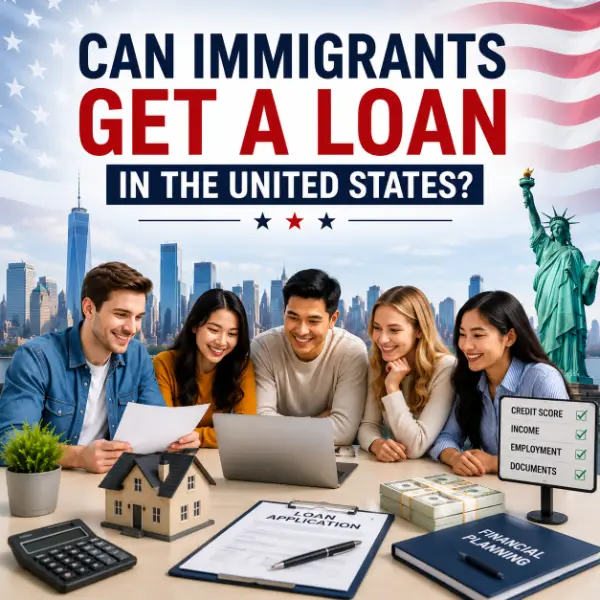
Can Immigrants Get a Loan in the United States? An Overview of Eligibility and Options
Yes, immigrants can obtain loans in the United States. However, eligibility depends heavily on immigration status, and the lending landscape has become more complex due to recent changes in government-backed programs. While pathways exist for many non-citizens, the specific options and terms vary significantly based on whether an individual is a permanent resident, holds a temporary visa, or is a DACA recipient.
Permanent Residents: The Easiest Path
For lawful permanent residents (green card holders), the process of applying for a loan is nearly identical to that for U.S. citizens . They can generally qualify for most types of loans, including personal loans, auto loans, and mortgages, using their Social Security Number (SSN) and U.S. credit history.
However, a significant exception has emerged for federal small business loans. As of March 1, 2026, the Small Business Administration (SBA) mandates that 100% of a business's ownership must be by U.S. citizens or nationals to be eligible for its 7(a) and 504 loan programs. This new policy excludes lawful permanent residents, even if they are the sole owners, from securing SBA-backed loans .
Visa Holders and Temporary Residents: More Hurdles
Individuals on temporary work or student visas (e.g., H-1B, L-1, F-1) face a more challenging but not impossible path. Access to federally backed mortgages has been severely restricted. Since May 2025, the Federal Housing Administration (FHA) has stopped insuring mortgages for non-permanent residents . This removes a popular option for first-time homebuyers that offered low down payments and flexible credit requirements.
Despite this, visa holders can still pursue homeownership through alternative "non-qualified mortgage" (non-QM) loans and some conventional loans . These programs typically require:
-
A valid visa and proof of employment authorization.
-
A higher down payment (often 20-30%) .
-
An established U.S. credit history or alternative credit data (e.g., rent, utility payments) .
-
Proof of stable income .
A cosigner who is a U.S. citizen or permanent resident can significantly improve approval odds for those with limited credit history .
For personal loans, some online lenders are more immigrant-friendly and explicitly accept applicants with certain visa types, provided they have a valid SSN or Individual Taxpayer Identification Number (ITIN) and adequate income .
Using an ITIN for Loans
An ITIN is issued by the IRS for tax purposes to individuals who are not eligible for an SSN . While an ITIN does not provide work authorization or legal status, some lenders use it as an alternative identification for certain loan programs.
ITIN loans are most common for mortgages. These are offered by a limited number of private lenders and community banks, often to self-employed individuals and foreign nationals . While they provide a path to homeownership, they generally come with:
-
Higher interest rates compared to traditional mortgages.
-
Higher down payment requirements (typically 20-30% or more) .
-
Stricter income verification requirements .
DACA Recipients: A Special Case
DACA recipients (Dreamers) are not eligible for federal student aid, including Pell Grants and federal student loans . However, they may qualify for private student loans, often requiring a cosigner who is a U.S. citizen or permanent resident . Some lenders also offer no-cosigner student loans to DACA students, basing approval on academic performance and future earning potential .
In the housing market, DACA recipients are impacted by the FHA's rule that excludes non-permanent residents from its mortgage insurance program . To buy a home, they would need to explore conventional or non-QM loan options with the stricter terms mentioned above.
Summary
| Immigration Status | Personal Loans | Federal Student Loans | SBA Business Loans | FHA Mortgages | Conventional/Non-QM Mortgages |
|---|---|---|---|---|---|
| U.S. Citizen/Permanent Resident | Yes | Yes | No (as of 2026) | Yes | Yes |
| Temporary Visa Holder | Yes, but with stricter requirements | No | No | No | Yes, with higher down payments & stricter terms |
| ITIN Borrower | Possibly | No | No | No | Yes, through specialized programs with higher rates/requirements |
| DACA Recipient | Possibly | No | No | No | Yes, through conventional or non-QM programs |
In conclusion, while obtaining a loan as an immigrant in the U.S. is certainly possible, the process is more fragmented than for citizens. The most accessible path is for lawful permanent residents, while temporary visa holders, ITIN filers, and DACA recipients must navigate a more complex system of private and alternative lenders, often facing higher costs and stricter terms.
 Twitter